
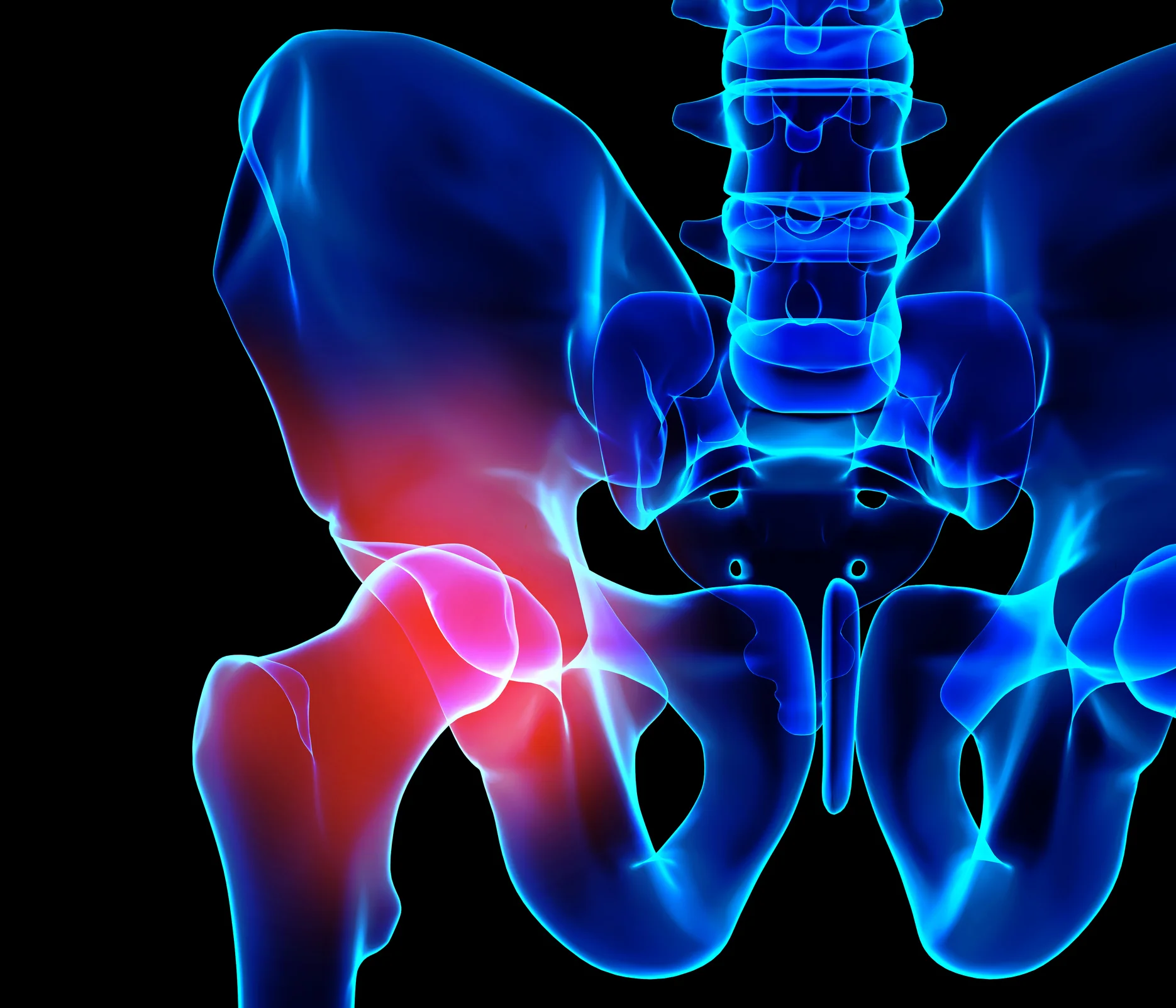
Hip Labral Tears and Femoroacetabular Impingement (FAI)
Dr. Raynor Explains FAI and Labral Tears With an Animated Drawing in This Video
Click through the interactive guide below to learn more about some of the common causes of hip pain
The walkthrough as text
The same walkthrough you can tap through above, written out so you can read it, print it or search it. Dr. Raynor narrates it in his own words. Tap a chapter to open it.
This short guide covers how the hip works, why it hurts, and what we can do about it, using the same illustrations I use in the exam room. It takes about three minutes.
1. How your hip works
- The hip is a ball-and-socket joint. The ball is the top of the thigh bone (femur), and the socket is part of the pelvis.
- The ball and socket are lined with smooth cartilage. Arthritis is the loss of that cartilage.
- The labrum is a rim of tissue around the edge of the socket. It acts like a seal and deepens the socket.
2. Why it hurts
- The labrum can tear away from the edge of the socket, which can cause pain.
- Many labral tears cause no symptoms. About two-thirds of people without hip pain have one on MRI. The concern is a tear that causes ongoing pain, not the tear itself.
- The shape of the hip can affect the labrum. In some hips the socket is deeper than normal, and the labrum is pinched earlier in motion.
- In others the socket is shallower than normal, a condition called dysplasia. The labrum is often larger and carries more of the load.
- Some people have extra bone where the ball meets the neck of the thigh bone, called a cam deformity.
- With each bend of the hip, the cam presses into the edge of the socket where the labrum attaches. Over time this can tear the labrum and damage the cartilage.
- Pain on the outside of the hip usually has a different cause. The IT band passes over the bone there, and the bursa beneath it can become inflamed. This is called bursitis, and it often responds well to an injection.
- Sometimes the source is not the hip at all. A pinched nerve in the lower back can cause pain that feels like it comes from the hip, so it is always considered.
3. Treatment options
- Most of the time, this improves without surgery. We begin with physical therapy and, if needed, an injection, and move up only if necessary.
- In young athletes, about eighty percent improve without an operation, with therapy alone or after a single injection. Surgery is reserved for those who do not improve.
4. If surgery is needed
- If surgery is needed, it is done arthroscopically through small incisions. The edge of the socket is trimmed slightly, and small anchors made of suture, usually two to four, are used to reattach the labrum.
- The extra bone is then shaved down so the hip can bend without pinching the repaired labrum.
- To reach the joint, a small opening is made in the capsule, the lining that surrounds the hip, and it is closed with sutures at the end. To protect it, avoid turning the leg outward for three weeks.
- The incisions are small, but recovery takes time: crutches for about a month, improvement by six weeks, further improvement by three months, and full recovery at about six months.
Before your visit
If you are scheduled to see me, here are a few things to consider before your visit, so we can make the most of our time together:
Things to consider
- Where is the pain: the groin, the outside of the hip, the buttock, or the back?
- What makes it worse: sitting, getting in and out of the car, twisting, running?
- Does it click or catch?
- What have you already tried: therapy, medicine, a shot?
- What do you want to get back to doing?
Questions you may want to ask
- Is it the joint itself, or the outside of the hip?
- Could my back be part of it?
- What happens if I wait?
- What’s the next step for me?
Hip Arthroscopy Frequently Asked Questions (FAQs)
How long am I in the hospital?
What are my restrictions after surgery?
When can I drive after hip arthroscopy?
What medications will I be on after surgery?
How long is the recovery after hip arthroscopy?
When can I go back to work after hip arthroscopy?
What do I do with my dressing after hip arthroscopy?
When can I shower or bathe after hip arthroscopy?
Will I have a brace after hip arthroscopy? How long do I wear the brace? When do I wear the brace?
How long do I use the continuous passive motion (CPM) machine after hip arthroscopy?