ACL surgery questions
Do I need surgery for a torn ACL?
Not everyone does. An athlete who cuts and pivots, a young patient, or a knee that gives way with daily activity usually does. A lower-demand adult whose knee is stable with therapy and a brace may not. Dr. Raynor goes through the trade-offs with your MRI in front of you. ACL tears: what they are and how they are treated.
Which graft is best: patellar tendon, quadriceps tendon or donor?
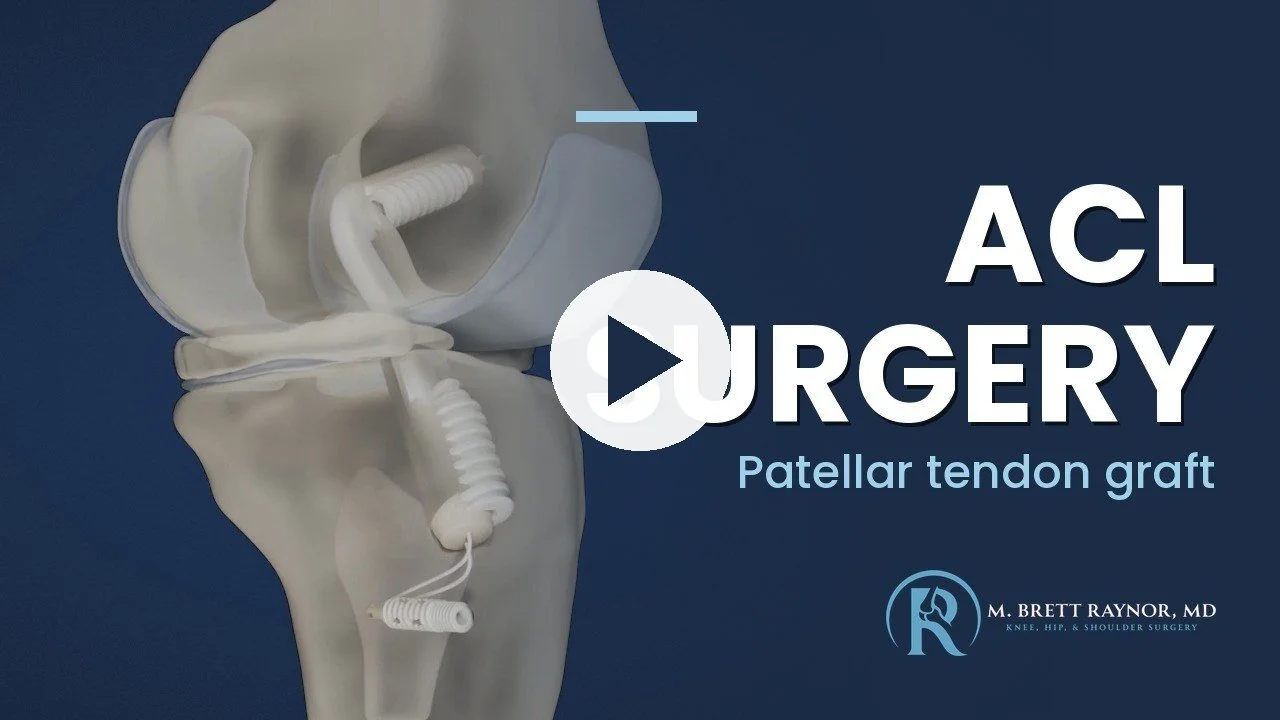
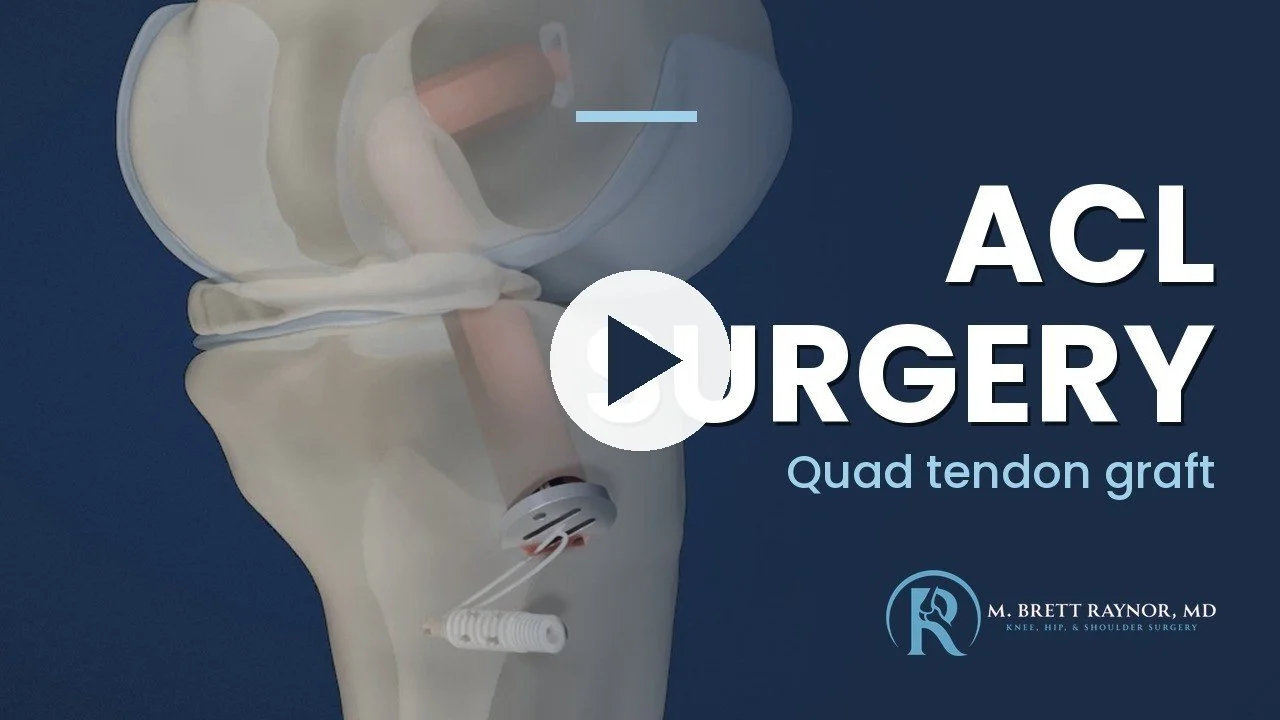
Dr. Raynor uses three grafts: your own patellar tendon, your own quadriceps tendon, or donor tissue. Which one is right depends on your knee, your goals and your sport, and he will go through the options with you at your visit. He narrates both of his own-tissue operations on film: patellar tendon and quadriceps tendon.
How is ACL reconstruction done?
As an outpatient surgery, using an arthroscope (a small camera) inside the knee along with an incision to take the graft: the graft is harvested and prepared, tunnels are drilled in the thighbone and shinbone where the original ACL attached, the graft is passed through and fixed at both ends, and any meniscus tear is repaired at the same time. The steps, in order, with the film.
What is the recovery like?
Walking on it early, with a brace and crutches at first; jogging at about three months; return to sport at seven to nine months, after strength and hop testing. The ACL recovery roadmap shows each stage, and the ACL FAQs answer the day-to-day questions.
What if my ACL reconstruction failed?
Bring the operative report and a new MRI. Revision ACL reconstruction is part of Dr. Raynor's practice, and the first job is to work out why the first one failed: tunnel position, graft choice, an unrepaired meniscus, or a return to sport too early. Sometimes the old tunnels need bone grafting before a new graft can be placed. Getting a second opinion.
Can I get a second opinion before surgery?
Yes, and it is routine. Bring your MRI and any notes from the first visit. What a second opinion with Dr. Raynor involves.