
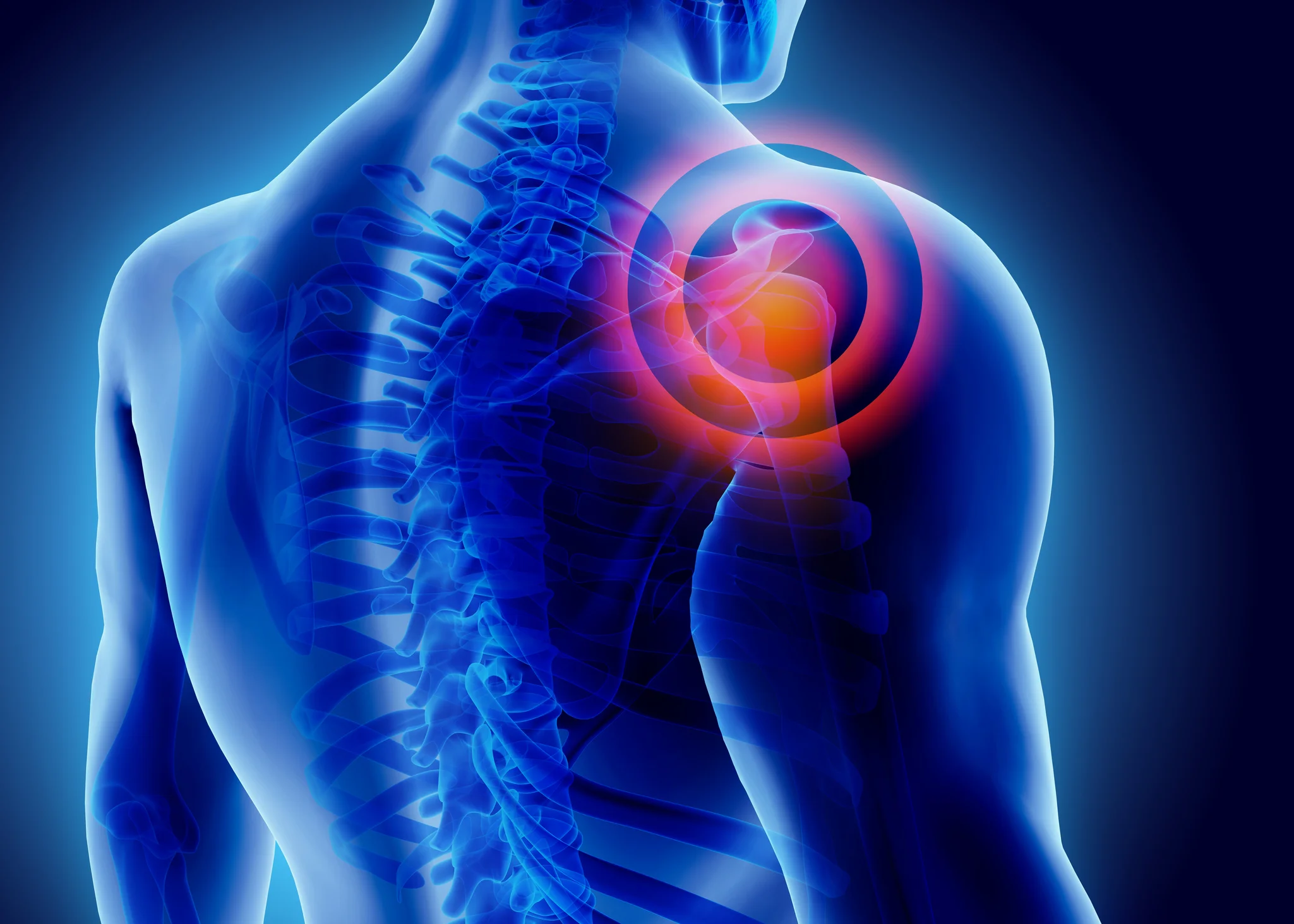
Rotator Cuff Repair
What does rotator cuff repair do? It takes a tendon that has torn away from the bone, prepares the bone where it belongs, and anchors the tendon back down so it can heal into the bone over the following months. Dr. Brett Raynor performs rotator cuff repair arthroscopically, through four or five small incisions, as an outpatient surgery: you go home the same day with a nerve block, wear a sling for six weeks, begin strengthening at three months, and are doing most of what you want to do by four to six months.
Dr. Raynor is a fellowship-trained orthopaedic sports medicine surgeon at Texas Orthopaedic Associates in Dallas, a D Magazine Best Doctor every year since 2019, and team physician for the U.S. Ski and Snowboard Team. Rotator cuff repair is one of the operations he performs most often, including large and revision repairs referred by other surgeons.
For what a tear is, how it is diagnosed, and when surgery is the right call, see Rotator Cuff Tears. The animation above shows the double-row repair described below.
Before surgery
An up-to-date MRI. If your scan is more than a few months old, Dr. Raynor will usually obtain a new one so he knows exactly what he is repairing.
Timing. A tear caused by an injury that left the arm weak is repaired early, within the first few months, while the tendon is still mobile. A degenerative tear that has not responded to therapy can be scheduled around your life; a few weeks one way or the other does not change the surgery.
Injections. If you have had a steroid injection, surgery is planned with some distance from it. Two or more injections in the year before a repair have been associated with about two to three times the rate of revision surgery (Cimino et al., Arthroscopy, 2020).
Planning for the sling. You will be one-handed for six weeks. Arrange help with driving, cooking and anything that takes two hands, and set up a recliner or a pillow ramp; most patients sleep better propped up in the early weeks.
How Dr. Raynor performs rotator cuff repair
The surgery is done arthroscopically, with a camera and small instruments. These are the steps, in the order they happen.
Nerve block and anesthesia. An anesthesiologist numbs the shoulder and arm with a nerve block before you go to sleep. The block keeps the arm comfortable for the first day or two after surgery, when it matters most.
Four small incisions. Dr. Raynor works through four small incisions, occasionally five if the tear needs another angle. One carries the camera; the others carry the instruments.
A look inside. He examines the whole joint first: the cartilage, the labrum, the biceps tendon and the undersurface of the cuff, and treats anything else that needs it.
The biceps. Most repairs include a biceps tenodesis. The biceps tendon runs through a tight groove at the front of the shoulder, next to the cuff, and is a common source of pain after a repair if it is left alone. Dr. Raynor releases it from the joint and reattaches it a little lower on the arm bone, where it no longer moves in and out of the groove. It takes a few extra minutes at the start of the surgery and does not change your recovery.
Clearing the space. The inflamed bursa above the tendon is removed, and the surface of the bone where the tendon belongs is prepared so that it bleeds, which is what the tendon heals into.
Placing the anchors. Small anchors, made either of suture material or of a small plastic anchor with sutures attached, are set into the bone at the inner edge of the tendon's footprint.
Passing the sutures. The sutures from those anchors are passed through the torn edge of the tendon.
Securing the tendon. The sutures are crossed over the top of the tendon and locked into a second row of anchors at the outer edge of the footprint. This presses the whole width of the tendon flat against the bone, rather than holding it by a single line of stitches.
Closing. The incisions are closed with a few stitches, usually four to six, which are removed at your first post-operative visit. The arm goes into the sling in the operating room, and you wake up in recovery.
What if the tear is too large to repair?
Sometimes a tear has been present so long that the tendon has retracted and settled into its new position, and it will not reach the bone without tension. Dr. Raynor plans for this before every repair and discusses the options with you beforehand:
Partial repair. Reattaching the part of the tendon that will reach. A repair does not have to be complete to give you a shoulder that works.
Using the biceps as a patch. The biceps tendon, which is being moved anyway, can be laid across the gap and fixed to the bone to cover the top of the ball.
A graft over or under the repair, to reinforce thin tissue.
A balloon spacer, placed above the ball to keep it centered in the socket while the shoulder muscles take over the work of the missing tendon.
Reverse shoulder replacement is reserved for the uncommon shoulder where repair has failed more than once or arthritis has developed. It is a backstop, not the plan.
Does the repair heal?
Not always, and it does not always have to. In a meta-analysis of 861 patients followed at least a year after rotator cuff repair, 78% of repairs were intact on imaging. Pain and function improved whether or not the repair had healed, and patients whose repairs were intact were measurably stronger (Russell et al., J Bone Joint Surg Am, 2014). Large, long-standing tears with poor-quality muscle heal less reliably than small, recent ones, which is the main reason timing matters. Dr. Raynor's view is that getting most of the tendon to heal, then getting the shoulder strong, is what gives you a shoulder that does what you need it to do.
Risks
Every surgery carries a small risk of infection, bleeding, injury to nearby structures, blood clots and anesthesia-related problems; all are uncommon after arthroscopic shoulder surgery. Two risks are specific to rotator cuff repair. Stiffness is expected, and early on it is a sign the repair is healing; the second stage of recovery is spent working it out. Retear happens when a repair does not heal. Large tears, revision repairs, smoking and not wearing the sling all raise the risk, which is why the repair is protected for six weeks.
Recovery after rotator cuff repair
The calendar comes from how long a tendon takes to heal to bone. Six weeks in a sling while the repair begins to heal, six weeks of working the stiffness out, strengthening from three months, and most patients doing everything they want by four to six months. The tendon is biologically healed at about four months; it can be closer to a year before you stop noticing the shoulder. A massive or revision repair follows the same roadmap with a slower start. The recovery roadmap covers every stage, and the rotator cuff repair FAQs answer the day-to-day questions about the sling, sleeping, showering, driving and work.
Click through the interactive guide below to see how Dr. Raynor explains rotator cuff tears and repair in clinic.
The "If surgery is needed" chapter as text
The walkthrough above covers the whole shoulder. The surgery chapter is written out here, in Dr. Raynor's own words; the full text, from how the shoulder works to the treatment options, is on the rotator cuff tears page.
If surgery is needed
- If surgery is needed, the tendon is reattached to the bone with small anchors so it can heal back in place. The procedure is done arthroscopically, through a few small incisions.
- If the biceps tendon is contributing to the pain, it can be moved slightly lower on the arm so it no longer passes through the narrow groove. This adds only a few minutes to the surgery.
- Tendon-to-bone healing takes time. You will wear a sling for six weeks and begin strengthening at about three months. The tendon is healed at about four months, most people return to their usual activities by six months, and full recovery takes about a year.
-
Yes. You go home the same day. Plan for someone to drive you and stay with you the first night.
-
The nerve block keeps the arm numb for the first day or two. After that, most patients manage with the prescribed medication for about a week, then over-the-counter options. Sleeping propped up helps.
-
Because it is a frequent source of pain after an otherwise good repair. Moving it out of its groove at the start of the surgery takes a few minutes and does not change the recovery. Left alone, it can continue to hurt; released without reattachment, the muscle can bunch in the arm. Reattaching it avoids both.
-
Dr. Raynor performs these regularly. The repair may use a graft, the biceps tendon, or a balloon spacer to make up for tissue that will not reach, and the recovery starts more slowly: no motion for four weeks instead of two, and a more gradual strengthening phase.
-
Light daily activities below shoulder level resume when the sling comes off at six weeks. Strengthening begins at three months, and most patients are doing everything they want by four to six months. The recovery roadmap lays out each stage.
-
Russell RD, et al. Structural integrity after rotator cuff repair does not correlate with patient function and pain: a meta-analysis. J Bone Joint Surg Am. 2014;96(4):265-271. doi:10.2106/JBJS.M.00265
Cimino AM, et al. Corticosteroid injections may increase retear and revision rates of rotator cuff repair: a systematic review. Arthroscopy. 2020;36(8):2334-2341. doi:10.1016/j.arthro.2020.04.044
Why patients choose Dr. Raynor for rotator cuff repair
Fellowship-trained in sports medicine at the Steadman Philippon Research Institute in Vail, Colorado
Board-certified orthopaedic surgeon; D Magazine Best Doctor every year since 2019
Team physician for the U.S. Ski and Snowboard Team, Highland Park High School, St. Mark's School of Texas, Hockaday and Ursuline Academy
Instructor at national arthroscopy courses and reviewer for the American Journal of Sports Medicine
More than 800 five-star Google reviews
Make an appointment
Call (214) 265-3211, schedule online, or send an appointment request. Texas Orthopaedic Associates, 7115 Greenville Avenue, Suite 310, Dallas, TX 75231.
Written and medically reviewed by M. Brett Raynor, M.D., board-certified orthopaedic sports medicine surgeon. Last reviewed 10/10/2026. General information for patients; your own surgical plan and post-operative instructions come first.