
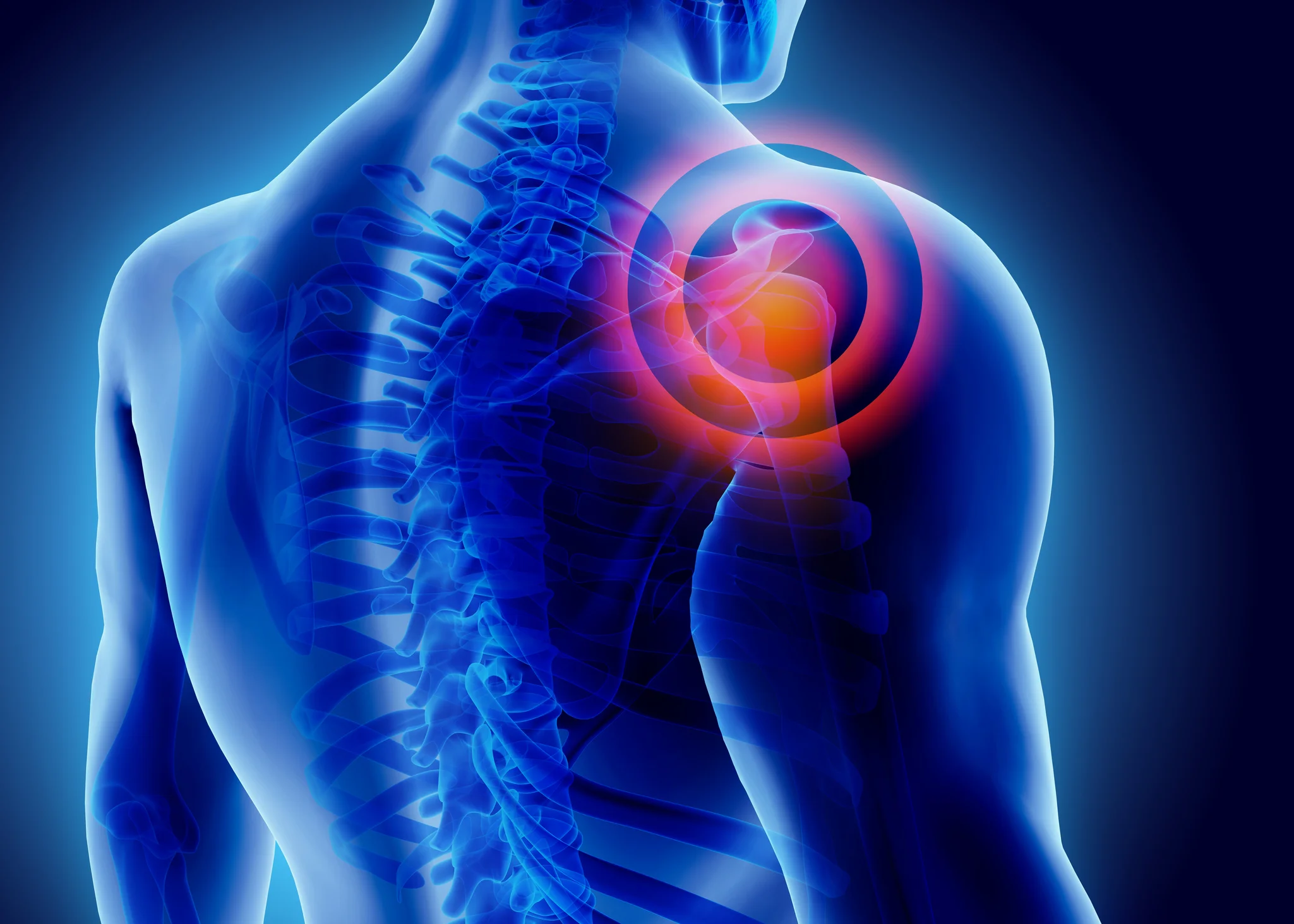
Arthroscopic Shoulder Stabilization (Labral Repair)
What does shoulder stabilization do? It puts the bumper back on the edge of the socket. When a shoulder dislocates, the labrum tears away from the front of the socket and the ligaments attached to it stretch. Stabilization reattaches the labrum and ligaments to the bone with small anchors so they heal back where they belong and the ball stays centered on the tee. Dr. Brett Raynor performs the repair arthroscopically, through a few small incisions, as an outpatient surgery. You go home the same day with a nerve block, wear a sling for six weeks, begin strengthening at three months, and return to sports between four and six months.
Dr. Raynor is a fellowship-trained orthopaedic sports medicine surgeon at Texas Orthopaedic Associates in Dallas, a D Magazine Best Doctor every year since 2019, and team physician for the U.S. Ski and Snowboard Team and several Dallas-area schools. He has published research on shoulder instability, including an outcomes study of arthroscopic stabilization in athletes. Shoulder stabilization is one of the operations he performs most often, in high school and college athletes especially.
For what a dislocation does to the shoulder, how likely it is to happen again, and when surgery is the right call, see Shoulder Dislocations and Shoulder Instability. This page covers the surgery itself.
Before surgery
Imaging. Surgery is planned from an MRI, usually with dye injected into the joint, which shows the labral tear, the ligaments, the dent in the back of the ball and the rotator cuff. When bone loss from the socket is a concern, a CT scan measures it. Dr. Raynor uses these to decide before the operation whether a labral repair alone is enough or whether the dent or the bone needs to be addressed as well.
Timing. Stabilization is not an emergency. The repair is the same whether it is done a few weeks or a few months after the dislocation, as long as the shoulder does not keep coming out in the meantime. For in-season athletes, Dr. Raynor usually schedules the repair for the end of the season.
Planning for the sling. You will be one-handed for six weeks. Arrange help with driving, cooking and anything that takes two hands, and set up a recliner or a pillow ramp; most patients sleep better propped up in the early weeks.
How Dr. Raynor performs shoulder stabilization
The surgery is done arthroscopically, with a camera and small instruments. These are the steps, in the order they happen.
Nerve block and anesthesia. An anesthesiologist numbs the shoulder and arm with a nerve block before you go to sleep. The block keeps the arm comfortable for the first day or two after surgery.
Small incisions. Dr. Raynor works through a few small incisions around the shoulder: one for the camera, the others for the instruments.
A look at everything. The camera confirms the labral tear, checks the ligaments, measures the dent in the back of the ball, looks at the edge of the socket for bone loss, and checks the rotator cuff and biceps. Anything found here is treated at the same surgery.
Preparing the socket. The torn labrum and the ligaments attached to it are freed from where they have scarred down and the edge of the socket is roughened so the repair heals to fresh bone.
Placing the anchors. Small anchors made of suture material are set into the edge of the socket where the labrum belongs, usually three or four along the front and bottom of the rim, and sometimes one or two in the back if the tear extends there.
Repairing the labrum and tightening the ligaments. The sutures from each anchor are passed through the labrum and the ligament tissue and tied down, which reattaches the bumper to the rim and takes up the slack in the ligaments all the way around. The repair is checked by moving the shoulder through the positions it used to come out in.
Closing. The incisions are closed with a few stitches, usually three to six, which come out at the first post-operative visit. The arm goes into the sling in the operating room, and you wake up in recovery.
The "If surgery is needed" chapter as text
The walkthrough above covers shoulder dislocations. The surgery chapter is written out here, in Dr. Raynor's own words; the full text, from the anatomy to the treatment options, is on the shoulder dislocations and instability page.
If surgery is needed
- In surgery, small anchors made of suture are placed in the bone, and the labrum and ligaments are reattached to the edge of the socket. The procedure is done arthroscopically, through a few small incisions.
- Viewed straight on, a repair usually uses three anchors, sometimes four. The repair also tightens the ligaments around the joint.
- If a significant amount of bone has been lost from the socket, an arthroscopic repair is less reliable. In that case a procedure that rebuilds the edge of the socket may be recommended, and Dr. Raynor will discuss what that means for you.
- Recovery: surgery is outpatient, followed by six weeks in a sling. Strengthening begins at three months, throwing at about five months, and contact sports at about six months.
The animation above shows the anchors and sutures described in steps 5 and 6.
When the repair needs more than anchors
A large dent in the ball (remplissage). If the Hill-Sachs dent in the back of the ball is big enough to catch on the edge of the socket, Dr. Raynor adds a remplissage: anchors placed in the dent draw the back of the rotator cuff into it, so the dent can no longer engage the rim. It adds a few minutes to the surgery and does not change the recovery. In a randomized trial of 108 patients with a Hill-Sachs lesion and little bone loss from the socket, adding a remplissage to the labral repair lowered the rate of another dislocation at two years from 18 percent to 4 percent, with no difference in shoulder function (MacDonald et al., J Shoulder Elbow Surg, 2021).
Bone lost from the socket. When repeated dislocations have chipped away a large share of the front of the socket, the golf tee has a piece missing, and reattaching the labrum alone no longer holds reliably: in a series of 194 arthroscopic repairs, recurrence was 4 percent in shoulders without a significant bone defect and 67 percent in shoulders with one (Burkhart and De Beer, Arthroscopy, 2000). The threshold is roughly one-sixth of the socket's width (Shin et al., Am J Sports Med, 2017). Those shoulders need a procedure that rebuilds the bone, and Dr. Raynor will discuss what that means for you before surgery. It is the main reason he recommends repairing a young athlete's shoulder before it has dislocated many times.
A posterior labral tear. When the shoulder came out the back, the same anchors reattach the back of the labrum. The precautions afterward point the other way (no reaching across the body or pushing with the arm for eight weeks), and the roadmap and FAQs spell them out.
Does the repair hold?
For most patients, yes. In a meta-analysis of ten prospective studies of first-time dislocators, recurrence after arthroscopic repair was 9.7 percent, compared with 67 percent with rehabilitation alone, and 93 percent of surgical patients returned to play (Hurley et al., Arthroscopy, 2020). Across 34 studies of arthroscopic Bankart repair, 81 percent of athletes returned to sport and 66 percent returned to their previous level (Memon et al., J Shoulder Elbow Surg, 2018). The repairs that fail are usually in shoulders with bone loss, which is why it is measured before surgery, or in contact athletes who return before the repair is ready, which is why nobody is cleared before four months.
Risks
Every surgery carries a small risk of infection, bleeding, injury to nearby structures, blood clots and anesthesia-related problems; all are uncommon after arthroscopic shoulder surgery, and a daily aspirin for about three weeks is prescribed against clots. Two risks are specific to this operation. Another dislocation happens in about one patient in ten, more often with bone loss or an early return to contact. Stiffness is the trade for stability: the repair tightens the shoulder on purpose, and the second stage of recovery is spent getting the motion back. It is one reason physical therapy starts within days of surgery.
Recovery after shoulder stabilization
The first six weeks protect the repair while it heals to the bone: the sling whenever you are up and around and while you sleep, out only for showering, the computer, television and meals once the nerve block has worn off and you have control of the arm. Physical therapy begins within days, and the therapist starts moving the shoulder for you at about two weeks, within the limits on your protocol. The next six weeks are about getting the motion back. Strengthening starts at three months, sport-specific work at four, a throwing progression and skiing at about five, and overhead, serving, swimming and contact sports at about six, once motion is full and strength is back. High school athletes are told six months and are released earlier when they are doing well; nobody plays competitive sports before four months. Two gym rules are permanent: no lat pulldowns behind the neck and no wide-grip bench press, because both put the shoulder in the position it used to come out of.
The shoulder stabilization recovery roadmap covers every stage, with a surgery-date tracker, and the shoulder instability FAQs answer the day-to-day questions about the sling, sleeping, showering, driving and work.
-
Yes. You go home the same day. Plan for someone to drive you and stay with you the first night.
-
The nerve block keeps the arm numb for the first day or two. After that, most patients manage with the prescribed medication for about a week, then with over-the-counter medication. The sling itself is the part most people find hardest.
-
A remplissage fills the dent in the back of the ball with the rotator cuff, using anchors placed in the dent, so the dent can no longer catch on the edge of the socket. Dr. Raynor adds it when the dent is large and there is little bone lost from the socket. In a randomized trial it lowered the rate of another dislocation from 18 percent to 4 percent at two years (MacDonald et al., J Shoulder Elbow Surg, 2021). It does not change the recovery.
-
A labral repair alone is not reliable once a large share of the socket's edge is gone (Burkhart and De Beer, Arthroscopy, 2000). Dr. Raynor measures bone loss on the MRI or a CT before surgery, and if it is significant he will discuss the procedure that rebuilds the bone and what that means for you. The way to avoid that conversation is to repair the shoulder before it has dislocated many times.
-
Sport-specific work starts at four months, throwing and skiing at about five, and overhead, serving, swimming and contact sports at about six. Nobody plays competitive sports before four months, and athletes who are doing well are released earlier than their six-month target. Across 34 studies, 81 percent of athletes returned to sport after arthroscopic repair (Memon et al., J Shoulder Elbow Surg, 2018). The recovery roadmap shows each stage.
-
About one patient in ten dislocates again after an arthroscopic repair, compared with about two in three without surgery (Hurley et al., Arthroscopy, 2020). The risk is higher with bone loss and with an early return to contact sports. If it happens, let the office know right away; a repeat dislocation can chip bone from the socket, and bone loss is what changes the plan.
-
Hurley ET, Manjunath AK, Bloom DA, et al. Arthroscopic Bankart repair versus conservative management for first-time traumatic anterior shoulder instability: a systematic review and meta-analysis. Arthroscopy. 2020;36(9):2526-2532. doi:10.1016/j.arthro.2020.04.046
Memon M, Kay J, Cadet ER, Shahsavar S, Simunovic N, Ayeni OR. Return to sport following arthroscopic Bankart repair: a systematic review. J Shoulder Elbow Surg. 2018;27(7):1342-1347. doi:10.1016/j.jse.2018.02.044
MacDonald P, McRae S, Old J, et al. Arthroscopic Bankart repair with and without arthroscopic infraspinatus remplissage in anterior shoulder instability with a Hill-Sachs defect: a randomized controlled trial. J Shoulder Elbow Surg. 2021;30(6):1288-1298. doi:10.1016/j.jse.2020.11.013
Burkhart SS, De Beer JF. Traumatic glenohumeral bone defects and their relationship to failure of arthroscopic Bankart repairs: significance of the inverted-pear glenoid and the humeral engaging Hill-Sachs lesion. Arthroscopy. 2000;16(7):677-694. doi:10.1053/jars.2000.17715
Shin SJ, Kim RG, Jeon YS, Kwon TH. Critical value of anterior glenoid bone loss that leads to recurrent glenohumeral instability after arthroscopic Bankart repair. Am J Sports Med. 2017;45(9):1975-1981. doi:10.1177/0363546517697963
Raynor MB, Horan MP, Greenspoon JA, Katthagen JC, Millett PJ. Outcomes after arthroscopic pancapsular capsulorrhaphy with suture anchors for the treatment of multidirectional glenohumeral instability in athletes. Am J Sports Med. 2016;44(12):3188-3197. doi:10.1177/0363546516659644
Why patients choose Dr. Raynor for shoulder stabilization
Fellowship-trained in sports medicine at the Steadman Philippon Research Institute in Vail, Colorado
Published research on shoulder instability, including an outcomes study of arthroscopic stabilization in athletes (American Journal of Sports Medicine, 2016)
Team physician for the U.S. Ski and Snowboard Team, Highland Park High School, St. Mark's School of Texas, Hockaday and Ursuline Academy
Board-certified orthopaedic surgeon; D Magazine Best Doctor every year since 2019
More than 800 five-star Google reviews
Make an appointment
Call (214) 265-3211, schedule online, or send an appointment request. Texas Orthopaedic Associates, 7115 Greenville Avenue, Suite 310, Dallas, TX 75231.
Written and medically reviewed by M. Brett Raynor, M.D., board-certified orthopaedic sports medicine surgeon. Last reviewed 10/11/2026. General information for patients; your own surgical plan and post-operative instructions come first.