
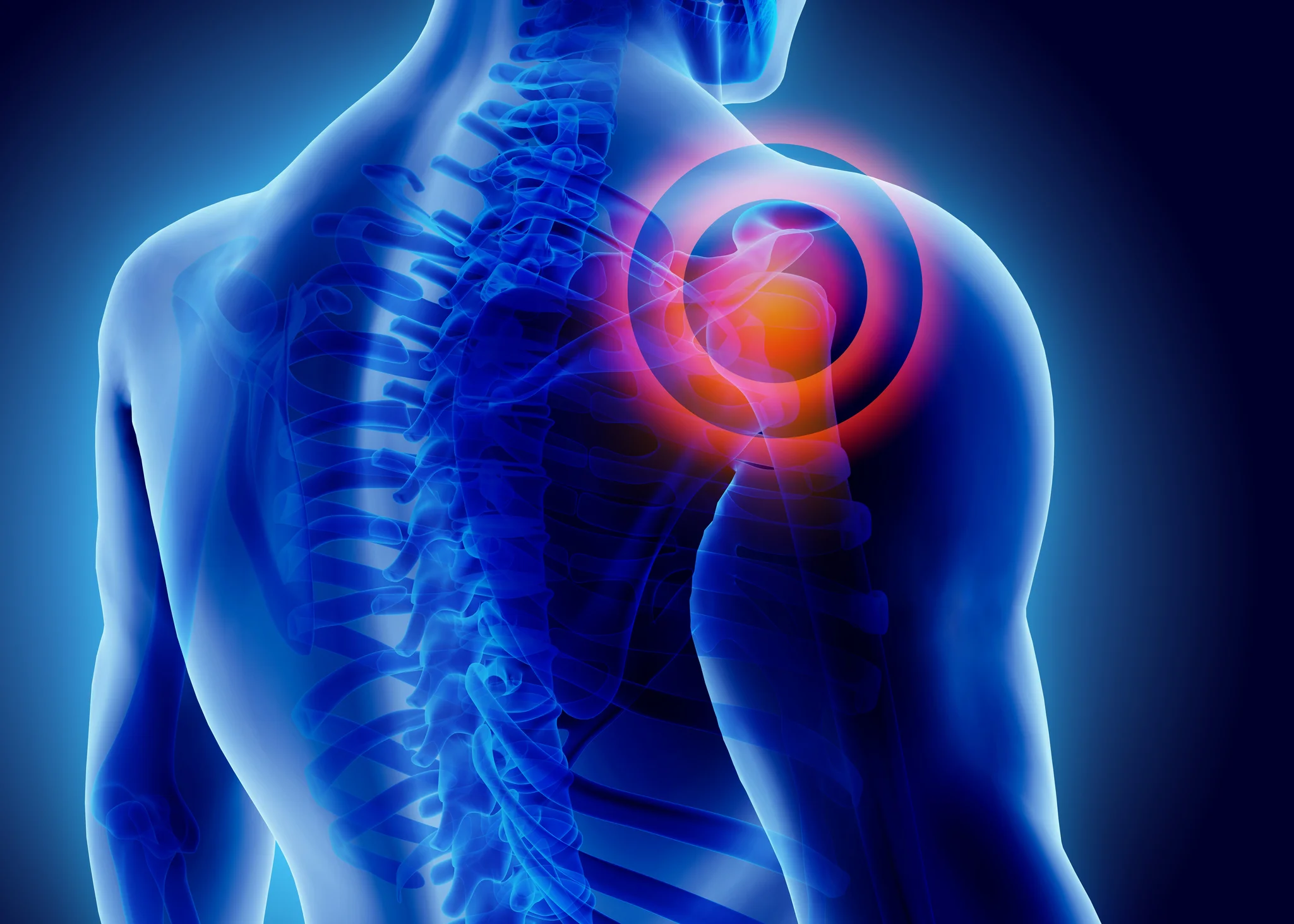
Shoulder Dislocations and Shoulder Instability
Will my shoulder dislocate again? For a young athlete, more often than not. The shoulder is the most mobile joint in the body, and the same shallow socket that lets it move so freely is what lets it come out. A first dislocation usually tears the labrum, the rim of tissue that keeps the ball centered, and once that bumper is torn the shoulder is easier to dislocate the next time. Whether to repair it, and when, depends on your age, your sport, and what the shoulder has already been through.
Dr. Brett Raynor is a fellowship-trained orthopaedic sports medicine surgeon in Dallas who treats shoulder dislocations every season as team physician for the U.S. Ski and Snowboard Team, Highland Park High School and St. Mark's School of Texas, and whose published research on shoulder instability includes a multicenter study of how instability is classified and an outcomes study of arthroscopic stabilization for loose shoulders. He has been named a D Magazine Best Doctor every year since 2019.
Call (214) 265-3211, schedule online, or send an appointment request. During football season, the Saturday morning injury clinic sees athletes the morning after a game. If you just hurt your shoulder, the Fast Track page explains how to get in quickly; you do not need a diagnosis first.
Key points
Most dislocations go out the front and tear the labrum on the way out. The dislocation is the event; the torn labrum is the injury.
Age is the biggest predictor of a second dislocation. Without surgery, about two out of three patients between 15 and 35 have the shoulder come out or slip again within five years.
Each dislocation can chip bone from the edge of the socket, and bone loss is what turns a routine arthroscopic repair into a bigger operation.
A labral repair cuts the chance of further instability (a full dislocation or a partial slip) from roughly two in three to about one in ten.
What holds the shoulder in place
The shoulder is a ball and socket, but the socket is shallow: picture a golf ball sitting on a tee. Three things keep the ball on the tee. The labrum is a rim of firm tissue around the edge of the socket that deepens it, like a bumper. Ligaments run from the ball to the labrum and tighten as the arm goes up and out. And the rotator cuff muscles pull the ball into the socket with every motion. Most of the shoulder's stability comes from those soft tissues, which is why a tear in them matters so much.
What happens when the shoulder dislocates
In most dislocations the ball comes out the front of the socket, usually with the arm up and out to the side, as in a tackle, a fall on an outstretched arm, or a hard throw. On the way out it tears the labrum away from the front edge of the socket (a Bankart tear) and stretches the ligaments. Then it goes back in, on its own or with help in the emergency room or on the sideline. In a study of young patients examined arthroscopically within ten days of a first dislocation, 97 percent had the labrum and ligaments torn from the socket (Taylor and Arciero, Am J Sports Med, 1997).
The back of the ball usually picks up a dent where it struck the edge of the socket, called a Hill-Sachs lesion. In that same study it was present in 57 of 63 shoulders, and none were large. The dent matters mainly if the shoulder keeps coming out. Less often the ligaments tear from the ball instead of the socket (a HAGL lesion); that is uncommon, but it changes the repair, so Dr. Raynor looks for it on every MRI.
SLAP tears (tears of the top of the labrum, where the biceps tendon attaches) are a different problem, usually without instability. The SLAP tears page covers them.
The walkthrough as text
The same walkthrough you can tap through above, written out so you can read it, print it or search it. Dr. Raynor narrates it in his own words. Tap a chapter to open it.
This short guide covers what holds your shoulder in, what happens when it comes out, and what we can do about it, using the same illustrations I use in the exam room. It takes about three minutes.
1. What holds it in place
- The shoulder is often compared to a golf ball sitting on a tee. This view looks down on it from above. The shallow socket gives the shoulder its wide range of motion, but it also makes dislocation possible.
- Several structures hold the ball in place. The labrum is a rim of tissue around the edge of the socket that deepens it, like a bumper.
- Ligaments run from the ball to the labrum and help keep the ball centered.
2. When it dislocates
- Most dislocations happen toward the front. As the ball comes out, it often tears the labrum away from the edge of the socket before it returns to place.
- The back of the ball often gets a small dent where it struck the edge of the socket, called a Hill-Sachs lesion. It is usually small and matters mainly if dislocations continue.
- The labrum may heal back in place. If it does not, or if the ligaments are stretched, the shoulder becomes more likely to dislocate again.
- Recurrence is the main concern after a dislocation. Among 100 young athletes treated with a sling and rehabilitation, about 67 have the shoulder come out or slip again (recurrent instability); after surgical repair, about 10 do. Young men in contact sports are at the highest risk.
- Each dislocation can cause more damage: the dent can enlarge and the edge of the socket can chip, like a golf tee with a chip in it. This makes further dislocations more likely.
3. Treatment options
- Treatment usually begins with rehabilitation. Physical therapy strengthens the rotator cuff muscles, which help hold the shoulder in place.
- While the shoulder recovers, avoid the position in which it tends to dislocate: arm raised, out to the side, and rotated back. Avoid reaching awkwardly overhead or behind you.
- If the shoulder feels stable after rehabilitation, surgery is not needed. If it remains unstable or dislocates again, surgical repair is recommended. Waiting risks additional dislocations.
4. If surgery is needed
- In surgery, small anchors made of suture are placed in the bone, and the labrum and ligaments are reattached to the edge of the socket. The procedure is done arthroscopically, through a few small incisions.
- Viewed straight on, a repair usually uses three anchors, sometimes four. The repair also tightens the ligaments around the joint.
- If a significant amount of bone has been lost from the socket, an arthroscopic repair is less reliable. In that case a procedure that rebuilds the edge of the socket may be recommended, and Dr. Raynor will discuss what that means for you.
- Recovery: surgery is outpatient, followed by six weeks in a sling. Strengthening begins at three months, throwing at about five months, and contact sports at about six months.
Before your visit
If you are scheduled to see me, here are a few things to consider before your visit, so we can make the most of our time together:
Things to consider
- How many times has it come out?
- Did someone have to put it back in, or did it go back on its own?
- What sport and position do you play, and is your season going on now?
- What position makes it feel like it might slip?
- What do you want to get back to doing?
Questions you may want to ask
- How likely is it to come out again?
- Can I finish my season?
- Is there any bone loss?
- What’s the next step for me?
Two kinds of instability
Instability after a dislocation. The most common pattern by far is a single traumatic dislocation out the front, followed by the occasional repeat; in a multicenter study of 383 instability patients that Dr. Raynor co-authored, those two categories alone accounted for four in ten patients (Hettrich et al., J Shoulder Elbow Surg, 2019). Sometimes the shoulder does not fully dislocate; it slips partway out and snaps back (a subluxation). A subluxation tears the same tissue and carries the same risk of recurrence. Less often the shoulder goes out the back, typically from a fall on the arm or from blocking in football; a posterior labral tear is repaired the same way, with its own set of precautions afterward.
A loose shoulder that has never dislocated (multidirectional instability). Some people, often swimmers, gymnasts, volleyball players and throwers, have shoulders that are loose in more than one direction without a single injury. That is multidirectional instability, and it starts with rehabilitation, not surgery. The section on treatment without surgery covers it.
Symptoms of shoulder instability
A dislocation that needed to be put back in, or a shoulder that popped out and went back on its own
A sense that the shoulder is about to slip when the arm is up and out to the side, as in throwing or reaching behind you
A sudden "dead arm" feeling or weakness with an overhead or throwing motion
Pain deep in the shoulder after an episode, often with clicking or catching
A shoulder you no longer trust in the position it came out in
Will it dislocate again?
This is the question that decides everything else, and the answer depends mostly on age. In a prospective study of 252 patients aged 15 to 35 treated with a sling and physical therapy after a first anterior dislocation, 56 percent dislocated again within two years and 67 percent within five years, with young men at the highest risk (Robinson et al., J Bone Joint Surg Am, 2006). Across the adult literature, recurrence runs about 39 percent overall, and being 40 or younger, being male, and having naturally loose joints each raise it (Olds et al., Br J Sports Med, 2015). In the youngest, most active group, cadets under 24, the recurrence rate without surgery was 90 percent (Taylor and Arciero, Am J Sports Med, 1997). The risk falls with age, and after 40 a first dislocation is more likely to stay a one-time event.
Male contact athletes under 25 sit at the top of the risk curve, and they are the patients Dr. Raynor most often advises to have the shoulder repaired rather than wait for the next dislocation.
What each dislocation costs
A dislocation is not a free event, even when the shoulder goes right back in. Each one can enlarge the labral tear, stretch the ligaments further, and chip bone from the edge of the socket. In a prospective MRI study of athletes, a single instability event removed an average of about 7 percent of the socket's width, and athletes with recurrent instability had lost about 23 percent (Dickens et al., Am J Sports Med, 2019). The golf tee gets a chip in it, the ball falls off more easily, and an arthroscopic repair becomes less reliable. The dent in the back of the ball deepens at the same time.
Over the long run, repeated dislocations are also hard on the cartilage. In a Swedish study that followed 223 shoulders for 25 years after a first dislocation, moderate or severe arthritis developed in 18 percent of shoulders that never dislocated again, 39 percent of shoulders that kept dislocating without surgery, and 26 percent of shoulders that were surgically stabilized (Hovelius and Saeboe, J Shoulder Elbow Surg, 2009).
The surgery to repair a torn labrum is the same whether it is done after the first dislocation or the fifth. What changes with each dislocation is whether that surgery is still enough.
How shoulder instability is diagnosed
Dr. Raynor starts with the story: how the shoulder came out, whether it has happened before, and what sport and position you play. The examination checks the direction the shoulder wants to go, how much the ligaments have stretched, and the strength of the rotator cuff. X-rays show the alignment and any bone chipped from the socket. An MRI, usually with dye injected into the joint, shows the labrum, the ligaments, the Hill-Sachs dent and the rotator cuff; it is ordered when its result would change the plan, and always before surgery. When bone loss is a concern, a CT scan measures it.
Treatment without surgery
For a first dislocation in a lower-risk patient, and for most multidirectional instability, treatment starts with rehabilitation. A sling for a short period, mostly for comfort; keeping a young patient in a sling for weeks has not been shown to lower the chance of a second dislocation (Paterson et al., J Bone Joint Surg Am, 2010). Then physical therapy to strengthen the rotator cuff and the muscles that steer the shoulder blade, since they can compensate for stretched ligaments. In the meantime, staying out of the position the shoulder likes to come out in: arm up, out to the side, and rotated back. Reaching under a bed or behind the car seat is how it happens.
Loose shoulders that have never dislocated do well with this program more often than not. When they do not, tightening the capsule arthroscopically is the next step. Dr. Raynor's own outcomes study of that operation in athletes found that 87 percent of shoulders had no further instability at three years and 77 percent of patients returned to sports at or near their previous level (Raynor et al., Am J Sports Med, 2016).
Playing through the season
Athletes who dislocate mid-season often want to finish it. Sometimes that is reasonable. In a prospective study of 45 college contact athletes, 73 percent returned to play in the same season, at a median of five days, but 64 percent of those who returned had another instability episode before the season ended (Dickens et al., Am J Sports Med, 2014). Dr. Raynor makes this decision with the athlete, the family and the athletic trainer: rehabilitation and often a brace, a clear understanding that it may come out again, and the repair scheduled for the end of the season. What matters is that it is a decision, made with the numbers on the table.
When surgery is the right call
Surgery is recommended when:
The shoulder has dislocated more than once, or still feels unstable after a course of rehabilitation
A young contact or overhead athlete has had a first dislocation and wants one repair and one recovery rather than a recurring problem. In a meta-analysis of ten prospective studies, arthroscopic repair after a first dislocation lowered the recurrence rate from 67 percent to about 10 percent and raised the rate of return to play (Hurley et al., Arthroscopy, 2020)
Imaging shows a tear that will not heal in position, or bone chipped from the socket
The shoulder cannot be trusted in the positions your sport or work requires
The operation is an arthroscopic labral repair: the torn labrum and ligaments are reattached to the edge of the socket with small anchors, through a few small incisions, as an outpatient surgery. How Dr. Raynor performs shoulder stabilization covers the steps, the add-ons for the dent and for bone loss, and how often the repair holds. Recovery is six weeks in a sling, strengthening from three months, and a return to sports between four and six months; the shoulder stabilization recovery roadmap walks through every stage.
Why patients choose Dr. Raynor for shoulder instability
Fellowship-trained in sports medicine at the Steadman Philippon Research Institute in Vail, Colorado
Published research on shoulder instability: first author of an outcomes study of arthroscopic stabilization for multidirectional instability in athletes (American Journal of Sports Medicine, 2016) and co-author of the multicenter studies behind the FEDS classification of shoulder instability (Journal of Shoulder and Elbow Surgery; Orthopaedic Journal of Sports Medicine)
Team physician for the U.S. Ski and Snowboard Team, Highland Park High School, St. Mark's School of Texas, Hockaday and Ursuline Academy, so unstable shoulders in contact athletes, and return-to-play decisions, are a regular part of his week
Board-certified orthopaedic surgeon; D Magazine Best Doctor every year since 2019
More than 800 five-star Google reviews
The research, and common questions
Expand any section below.
-
Age at the first dislocation is the strongest predictor. Among 252 patients aged 15 to 35 treated without surgery, 56 percent had dislocated again by two years and 67 percent by five years, and most recurrences happened within the first two years (Robinson et al., J Bone Joint Surg Am, 2006). A meta-analysis of ten adult studies put overall recurrence at 39 percent, with the risk about thirteen times higher at age 40 or younger and about three times higher in men (Olds et al., Br J Sports Med, 2015). In cadets under 24, recurrence without surgery was 90 percent (Taylor and Arciero, Am J Sports Med, 1997). After an arthroscopic repair, recurrence across ten prospective studies was about 10 percent (Hurley et al., Arthroscopy, 2020).
-
Yes. A single instability event removed an average of about 7 percent of the socket's width on MRI, and athletes with recurrent instability had lost about 23 percent (Dickens et al., Am J Sports Med, 2019). Over 25 years, moderate or severe arthritis was about twice as common in shoulders that kept dislocating as in shoulders that never dislocated again (Hovelius and Saeboe, J Shoulder Elbow Surg, 2009). Bone loss is what changes the plan: once enough of the socket's edge is gone, a soft-tissue repair alone is no longer reliable.
-
Yes. A shoulder that dislocated and went back in by itself has usually torn the same tissue as one that needed to be put back in the emergency room. An examination and, when it would change the plan, an MRI establish what tore and your risk of it happening again, which is the basis for every decision that follows.
-
Sometimes. In college contact athletes who dislocated mid-season, 73 percent were back within about a week, but most of those had another episode before the season ended (Dickens et al., Am J Sports Med, 2014). Dr. Raynor makes the call with the athlete, the family and the athletic trainer, usually with a brace and rehabilitation, and schedules the repair for the end of the season. It is a reasonable plan as long as everyone understands it may come out again before then.
-
A short period, mostly for comfort. In patients under 30, recurrence was no lower with three weeks or more in a sling than with one week or less (Paterson et al., J Bone Joint Surg Am, 2010). What lowers the risk is the rehabilitation that follows, and in high-risk patients, the repair.
-
Usually, if the result would change the plan, and always before surgery. The MRI, often with dye injected into the joint, shows the labrum, the ligaments, the dent in the ball and the rotator cuff. When bone loss is a concern, a CT scan measures it more precisely. X-rays are taken first to check the alignment and look for a chip off the socket.
-
That is multidirectional instability, and it starts with physical therapy for the rotator cuff and the shoulder blade muscles. Most patients improve. For those who do not, the capsule can be tightened arthroscopically with anchors. In Dr. Raynor's study of 45 athletes' shoulders treated that way, 87 percent were free of instability at three years and 77 percent of patients returned to sports at or near their previous level (Raynor et al., Am J Sports Med, 2016).
-
An arthroscopic labral repair: the torn labrum and ligaments are reattached to the socket with small suture anchors, usually three or four, through a few small incisions, as an outpatient surgery. If the dent in the ball is large, a stitch into it (a remplissage) can be added. How Dr. Raynor performs shoulder stabilization covers the steps; the recovery roadmap covers the six weeks in a sling and the return to sport at four to six months; the shoulder instability FAQs answer the day-to-day questions.
-
Taylor DC, Arciero RA. Pathologic changes associated with shoulder dislocations. Arthroscopic and physical examination findings in first-time, traumatic anterior dislocations. Am J Sports Med. 1997;25(3):306-311. doi:10.1177/036354659702500306
Robinson CM, Howes J, Murdoch H, Will E, Graham C. Functional outcome and risk of recurrent instability after primary traumatic anterior shoulder dislocation in young patients. J Bone Joint Surg Am. 2006;88(11):2326-2336. doi:10.2106/JBJS.E.01327
Olds M, Ellis R, Donaldson K, Parmar P, Kersten P. Risk factors which predispose first-time traumatic anterior shoulder dislocations to recurrent instability in adults: a systematic review and meta-analysis. Br J Sports Med. 2015;49(14):913-922. doi:10.1136/bjsports-2014-094342
Hurley ET, Manjunath AK, Bloom DA, et al. Arthroscopic Bankart repair versus conservative management for first-time traumatic anterior shoulder instability: a systematic review and meta-analysis. Arthroscopy. 2020;36(9):2526-2532. doi:10.1016/j.arthro.2020.04.046
Dickens JF, Slaven SE, Cameron KL, et al. Prospective evaluation of glenoid bone loss after first-time and recurrent anterior glenohumeral instability events. Am J Sports Med. 2019;47(5):1082-1089. doi:10.1177/0363546519831286
Dickens JF, Owens BD, Cameron KL, et al. Return to play and recurrent instability after in-season anterior shoulder instability: a prospective multicenter study. Am J Sports Med. 2014;42(12):2842-2850. doi:10.1177/0363546514553181
Hovelius L, Saeboe M. Neer Award 2008: Arthropathy after primary anterior shoulder dislocation. 223 shoulders prospectively followed up for twenty-five years. J Shoulder Elbow Surg. 2009;18(3):339-347. doi:10.1016/j.jse.2008.11.004
Paterson WH, Throckmorton TW, Koester M, Azar FM, Kuhn JE. Position and duration of immobilization after primary anterior shoulder dislocation: a systematic review and meta-analysis of the literature. J Bone Joint Surg Am. 2010;92(18):2924-2933. doi:10.2106/JBJS.J.00631
Hettrich CM, Cronin KJ, Raynor MB, et al. Epidemiology of the Frequency, Etiology, Direction, and Severity (FEDS) system for classifying glenohumeral instability. J Shoulder Elbow Surg. 2019;28(1):95-101. doi:10.1016/j.jse.2018.08.014
Raynor MB, Horan MP, Greenspoon JA, Katthagen JC, Millett PJ. Outcomes after arthroscopic pancapsular capsulorrhaphy with suture anchors for the treatment of multidirectional glenohumeral instability in athletes. Am J Sports Med. 2016;44(12):3188-3197. doi:10.1177/0363546516659644
Dr. Raynor has also written longer answers to common questions about shoulder dislocations:
Make an appointment
Call (214) 265-3211, schedule online, or send an appointment request. Texas Orthopaedic Associates, 7115 Greenville Avenue, Suite 310, Dallas, TX 75231. During football season, the Saturday morning injury clinic sees athletes from 8:00 AM. You can also read why patients choose Dr. Raynor as their Dallas shoulder instability surgeon.
Written and medically reviewed by M. Brett Raynor, M.D., board-certified orthopaedic sports medicine surgeon. Last reviewed 10/11/2026. General information for patients; it does not replace an examination.