
Meniscus Tears
Dr. Raynor gives an explanation of the different types of meniscus tears and the treatment options available.
Click through the guide below to learn about some common causes of knee pain
The walkthrough as text
The same walkthrough you can tap through above, written out so you can read it, print it or search it. Dr. Raynor narrates it in his own words. Tap a chapter to open it.
This short guide covers what is inside the knee, the problems that can cause pain without showing on an X-ray, and the treatments that help, using the same 3D knee I use in the exam room. It takes about three minutes.
1. Inside the knee
- Many causes of knee pain do not show up on an X-ray. The space between the bones on an X-ray reflects the cartilage; when that space looks normal, the pain is usually coming from somewhere else.
- Four main ligaments stabilize the knee: the MCL on the medial side, the LCL on the lateral side, and the ACL and PCL in the center. Each one is checked during the examination.
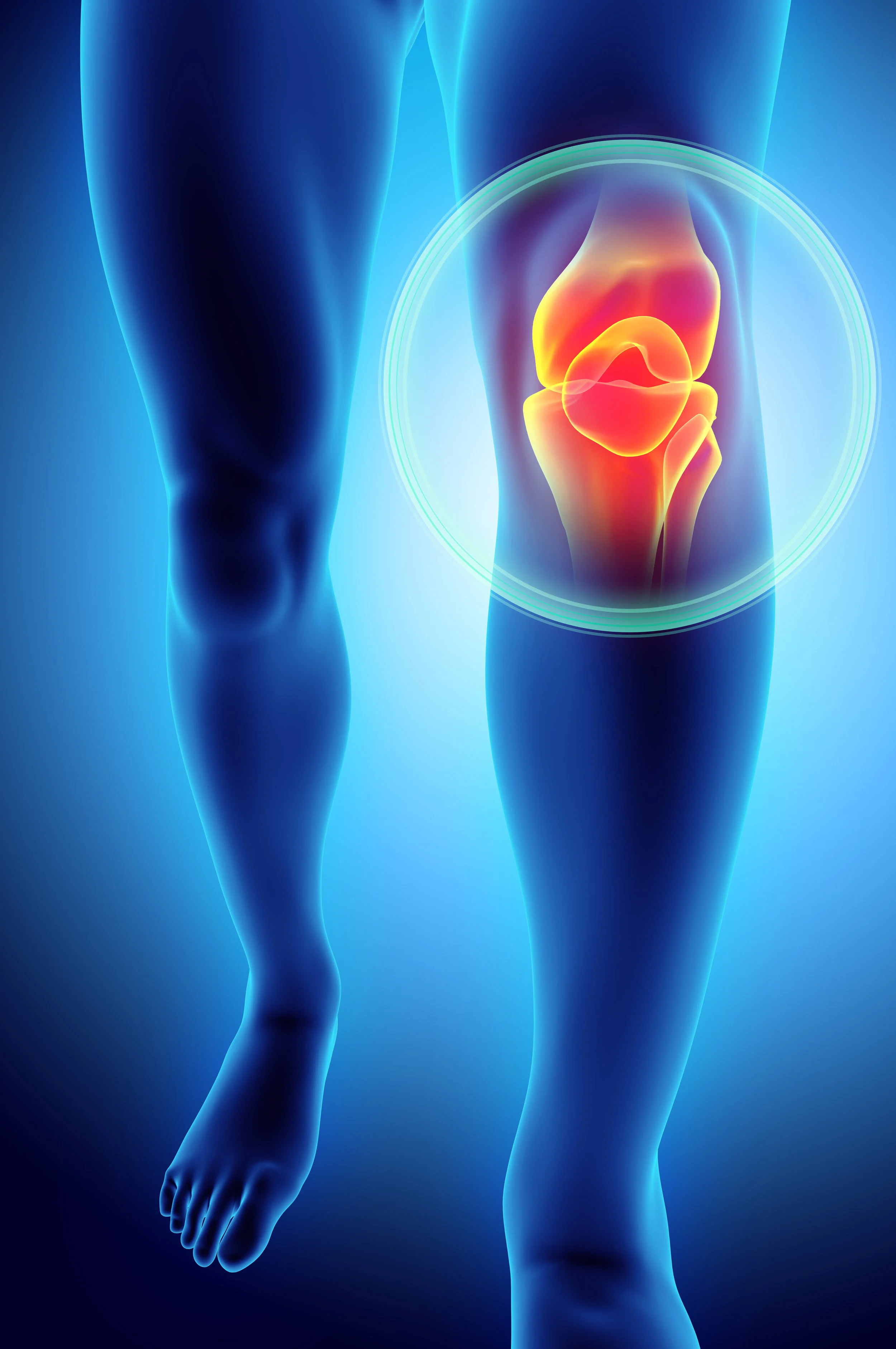
- The menisci are two cushions between the bones that absorb shock. Small meniscus tears tend to cause pain along the sides and back of the knee.
2. Common sources of pain
- Viewed from above, meniscus tears come in several patterns. A vertical tear near the outer edge, where there is a blood supply, can sometimes be repaired and heal.
- A flap tear is a small piece of the edge that moves back and forth, like a hangnail, and can irritate the joint.
- The most common pattern is a horizontal tear, which splits the meniscus into upper and lower layers.
- About 1 in 4 people over 50 without knee pain have a meniscus tear on MRI and are unaware of it. Not every tear hurts, and not every tear needs surgery.
- Cartilage can also wear slightly, not enough to show on an X-ray but enough to cause pain. This is called chondromalacia.
- The most common location is the back of the kneecap. Some wear there is normal after about age thirty; pain from it is not.
- The kneecap joint carries forces of up to about seven times body weight. When the quadriceps is strong, it usually does not hurt, even if it makes noise. Grinding without pain is not a concern.
- Two other structures can become irritated. One is a small fat pad behind the tendon below the kneecap.
- The other is a plica, a fold of tissue left over from development.
3. Treatment options
- Pain can set off a cycle: irritation causes swelling, swelling weakens the quadriceps, a weaker quadriceps increases pain, and the exercises that would help become uncomfortable.
- Treatment starts with the simplest options and progresses as needed: staying active, physical therapy to strengthen the quadriceps, anti-inflammatory medicine, and then an injection. Surgery is not the starting point.
- An injection can act as a reset. Calming the inflammation often allows the knee to return to how it felt before the flare.
- Staying active is one of the best things you can do for your knees. Squats and lunges to about ninety degrees and a stationary bike are good choices. On a painful day, it is fine to rest.
Before your visit
If you are scheduled to see me, here are a few things to consider before your visit, so we can make the most of our time together:
Things to consider
- Where does it hurt: the front, the inside, the outside, or the back?
- What makes it worse: stairs, squatting, sitting a long time, running?
- Does it swell, catch, or give way?
- What have you already tried: therapy, medicine, a shot?
- What do you want to get back to doing?
Questions you may want to ask
- What do you think is causing it?
- What can I do at home?
- Do I need an MRI, or should we try other things first?
- What’s the next step for me?
Frequently Asked Questions (FAQs)
Click on one of the links below for answers to some of the frequently asked questions (FAQs) about surgery for meniscus tears
Click here for more information about meniscus tears from the AAOS
Written and medically reviewed by M. Brett Raynor, M.D., board-certified orthopaedic sports medicine surgeon. Last reviewed 11/3/2026. General information for patients; it does not replace an examination.